Emergency electrician: what to do before help arrives
By Amara Okafor · Updated 2026-06-20
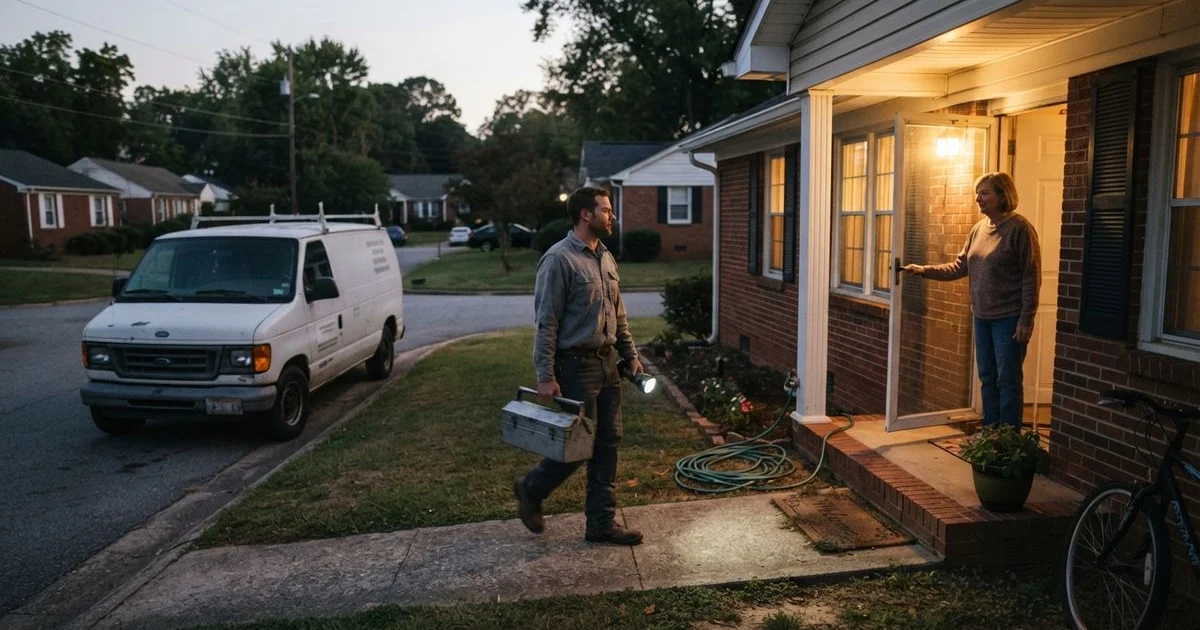
Power problems rarely happen on a convenient schedule. A breaker trips at 11 p.m., an outlet starts sparking mid-storm, or you come home to half the house dark and no obvious cause. Before you call anyone, a few minutes of the right moves can keep you safe and make the technician’s job faster once they arrive.
Know what actually counts as an emergency
Not every electrical hiccup needs a 2 a.m. call. Some signs mean stop and call right now:
- Sparks, visible flames, or a burning smell coming from an outlet, switch, or the panel
- A breaker that trips immediately every time you reset it
- Exposed or chewed wiring, especially anywhere near water
- Total loss of power with no utility outage in your area
- A shock or tingling sensation when touching an appliance or switch
Things that can usually wait for regular business hours: a single dead outlet, a flickering light in one room, or a GFCI outlet that won’t reset but shows no other symptoms. If you’re not sure which category you’re in, most 24-hour electricians would rather get a call and rule out danger than have you guess wrong.
What to do in the first five minutes
- Cut power to the affected circuit or the whole panel. If you can safely reach your panel and identify the breaker involved, flip it off. If you can’t tell which breaker it is, or the panel itself looks damaged, shut off the main breaker.
- Keep people and pets away from the area. Water, metal, and standing near a damaged outlet all raise the risk of shock.
- Don’t touch anything wet near an electrical source. If there’s water involved, that’s not a DIY situation. Stay clear and wait for a professional.
- Unplug what you reasonably can, especially anything that was running when the problem started, without reaching into a panel or outlet that looks compromised.
- Call a 24-hour electrician, and if there’s any sign of fire, call the fire department first.
What to say when you call
Giving the dispatcher useful information gets a technician moving faster and often means they show up with the right parts. Mention:
- What you saw or smelled (sparks, smoke, burning smell, buzzing)
- Whether you already shut off a breaker or the main panel
- Roughly how old your home or panel is, if you know
- Whether anyone is without power to medical equipment, heat, or air conditioning
Reviewers across Spartanburg’s electrical companies consistently mention same-day or same-hour dispatch for genuine emergencies, with technicians who explain what they’re doing rather than just fixing and leaving. That kind of clear communication matters more in an emergency than it does for routine work, since you’re making decisions under some stress.
Storm season is when these calls spike hardest, since wind and lightning knock out power and damage service lines. The storm season generator and electrical prep guide covers how to get your home ready before an outage turns into an emergency.
Emergency vs. routine: quick comparison
| Situation | Emergency (call now) | Can wait for regular hours |
|---|---|---|
| Sparking outlet or switch | Yes | No |
| One outlet not working, no other symptoms | No | Yes |
| Breaker trips repeatedly on reset | Yes | No |
| Flickering light in a single room | No | Yes |
| Burning smell from the panel | Yes | No |
| Power out in just one room, rest of house fine | Depends on cause | Often, if no burning smell |
After the technician arrives
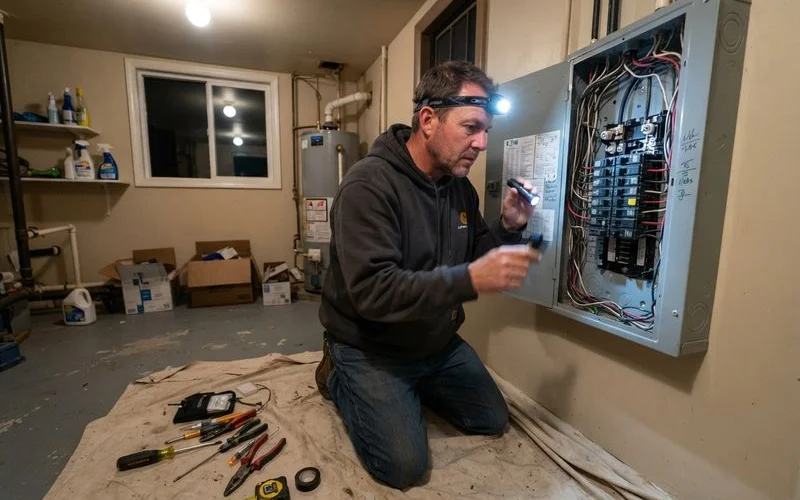
A good emergency visit doesn’t end at “it’s working again.” Ask what caused the problem, whether it’s a symptom of something bigger like an aging panel, and whether a permit or follow-up inspection is needed for whatever repair was made. If the emergency involved a breaker that kept tripping, that’s often a sign of an overloaded circuit or aging wiring rather than a one-time glitch, and it’s worth asking directly whether your home’s electrical service is enough for what you’re actually running through it.
If you’d rather line up a provider before you’re in a crisis, browse local coverage on the 24/7 emergency electrician page so you already know who to call.
This directory’s rankings are built from real review data and a published scoring method, not paid placement, so you can compare local electricians on more than a star average. See how that scoring works on the methodology page.
Questions people ask
- Should I turn off my main breaker during an electrical emergency?
- If you smell burning, see sparks, or hear buzzing from your panel, shutting off the main breaker is usually safe and stops the flow of power to the problem. Don't touch the panel if it's wet, hot, or visibly damaged. Call for help instead.
- How fast can an emergency electrician actually get to my house?
- In Spartanburg, several 24/7 electricians report arriving within an hour of a call, even overnight, though response time depends on how many jobs are ahead of yours and how far you are from their base.
- Is a burning smell always an emergency?
- Treat it as one until proven otherwise. A burning smell near an outlet, switch, or the panel can mean overheated wiring, which is a fire risk. A burning smell from a single appliance may just mean that appliance needs to be unplugged and checked.
- What counts as an electrical emergency versus something that can wait?
- Sparking outlets, a breaker that won't reset, a burning smell, exposed wiring, or total power loss during extreme heat or cold are emergencies. A single dead outlet or a flickering lamp usually isn't.