
What to expect during an electrical panel upgrade
By Amara Okafor · Updated 2026-06-23
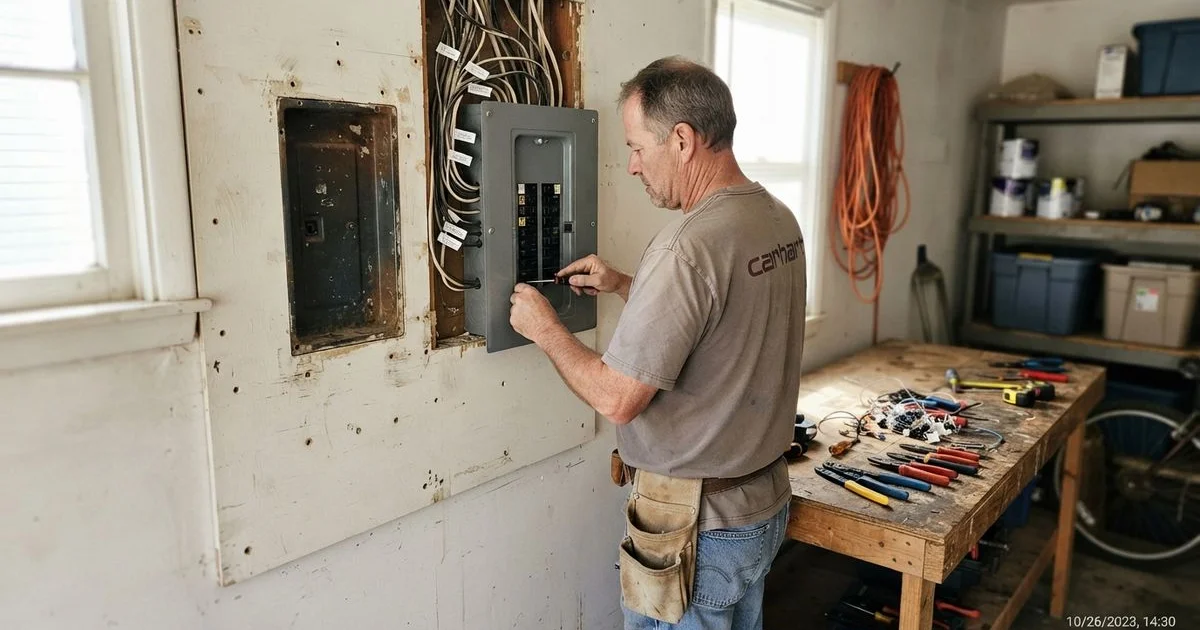
A panel upgrade sounds like a big, disruptive project, and the day of, it is: your power goes out for hours. But the process itself follows a predictable sequence, and knowing the steps ahead of time makes it much less stressful when the lights go out mid-morning.
Step 1: the initial assessment
Before any work happens, an electrician evaluates your current panel, meter base, and overall electrical load. They’re checking the panel’s age and brand (some older brands like Federal Pacific or Zinsco carry known safety issues that make replacement the right call regardless of visible problems), how much amperage your household actually needs, and whether the meter base or service entrance also needs attention. This visit is also when you’ll get a written estimate, ideally itemized by labor, materials, and permit costs.
If a standby generator is part of the plan, this same assessment doubles as the first step of that installation too. The standby generator installation guide covers how that process picks up from here.
Step 2: pulling the permit
Panel replacement legally requires a permit in Spartanburg County and the City of Spartanburg. The electrician files the permit application, which typically takes a few days to process before work can be scheduled. This step is easy to skip, and some contractors do, but unpermitted panel work creates real problems if you sell the home later. Confirm upfront that your quote includes permit and inspection fees.
Step 3: the installation day
This is when the power goes out. The electrician disconnects the old panel, and if needed, coordinates a brief utility shutoff for meter base work. They install the new panel, matched to your actual load (not just swapped for a bigger box without a load calculation), run or reconnect circuits, and label everything clearly. Expect this to take a half day to a full day depending on complexity and how much of the existing wiring needs to be brought up to current code along the way.
| Stage | What happens | Typical duration |
|---|---|---|
| Assessment | Load evaluation, panel inspection, written estimate | Single visit, under an hour |
| Permit filing | Application submitted to county or city | A few days to process |
| Installation | Panel swap, power off for the house | Half day to full day |
| Inspection | County or city inspector reviews the work | Scheduled after install, days to weeks out |
Step 4: inspection and sign-off
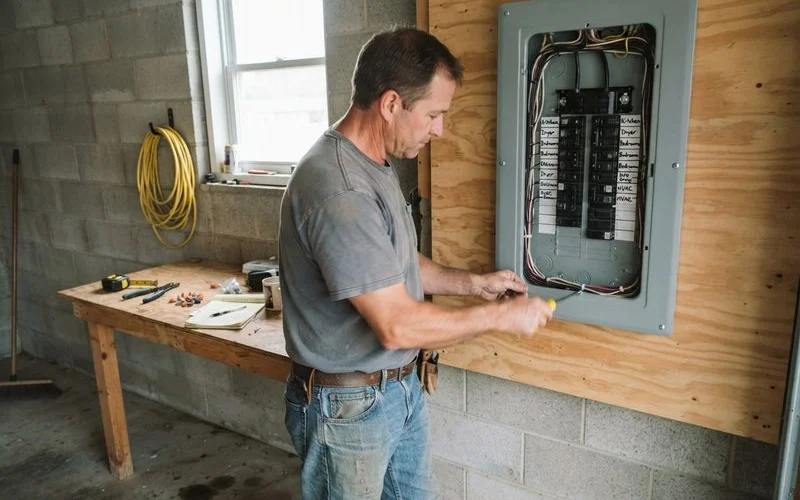
After installation, a county or city inspector reviews the work: wire gauge, grounding, breaker sizing, panel labeling, and general code compliance. This is the step that protects you as the homeowner, since it means someone besides the installer has verified the work. If the inspector flags an issue, the electrician corrects it, and the panel gets a final sign-off.
What good panel work looks like when it’s done
Walk through the finished panel with your electrician before they leave. Look for a neat interior with clearly labeled circuits, breakers that match the panel brand rather than off-brand substitutes, no exposed wire nicks, and a panel cover that closes flush. Ask to see the permit and confirm the inspection is scheduled or already passed. A contractor who avoids pulling a permit on panel work is a real red flag, since it usually means nobody but the installer ever checks it.
Reviewers across Spartanburg’s panel-upgrade providers consistently mention accurate quotes and clean, code-compliant installs as the difference between a good experience and a frustrating one, so ask direct questions about permits and inspections before you sign anything.
Planning around the power-off window
Since your whole home loses power for most of the work day, plan around it rather than being caught off guard. Charge phones and laptops the night before, keep the refrigerator closed as much as possible to hold its temperature, and if anyone in the household depends on powered medical equipment, coordinate the timing and a backup plan with your electrician in advance. Scheduling the work for a day when you don’t need to work from home, or arranging to be elsewhere during the outage, makes the day go a lot more smoothly.
For a rough sense of what your specific upgrade might cost based on your current and desired panel size, this directory offers a free panel upgrade cost estimator on its tools page. If you’re ready to see local options, browse the panel upgrades and repair category, or read the methodology behind how this directory scores and ranks providers. You can also start from the home page to compare across all electrical categories in Spartanburg.
Questions people ask
- How long does a panel upgrade take?
- Most residential panel upgrades take a half day to a full day of on-site work. The permit and inspection scheduling around it can stretch the overall timeline to a week or two, even though the physical work is done in a day.
- Will I lose power during the upgrade?
- Yes, expect the whole house to lose power for most of the work day. If the meter base also needs work, the electrician coordinates a brief shutoff with the utility, which can take longer to schedule than the panel swap itself.
- Do I need to be home during the work?
- You should be reachable and ideally on-site at the start and end, since the electrician needs access to the panel location and you'll want to walk through what changed before they leave, but you don't need to watch the entire job.
- What happens if the inspector finds a problem?
- If the inspection turns up an issue, the electrician typically has to correct it before final sign-off, which can mean a second, shorter visit. A contractor who pulls permits routinely usually anticipates common inspection issues and avoids most of them.