
Standby generator safety: carbon monoxide risk and code requirements
By Amara Okafor · Updated 2026-07-08
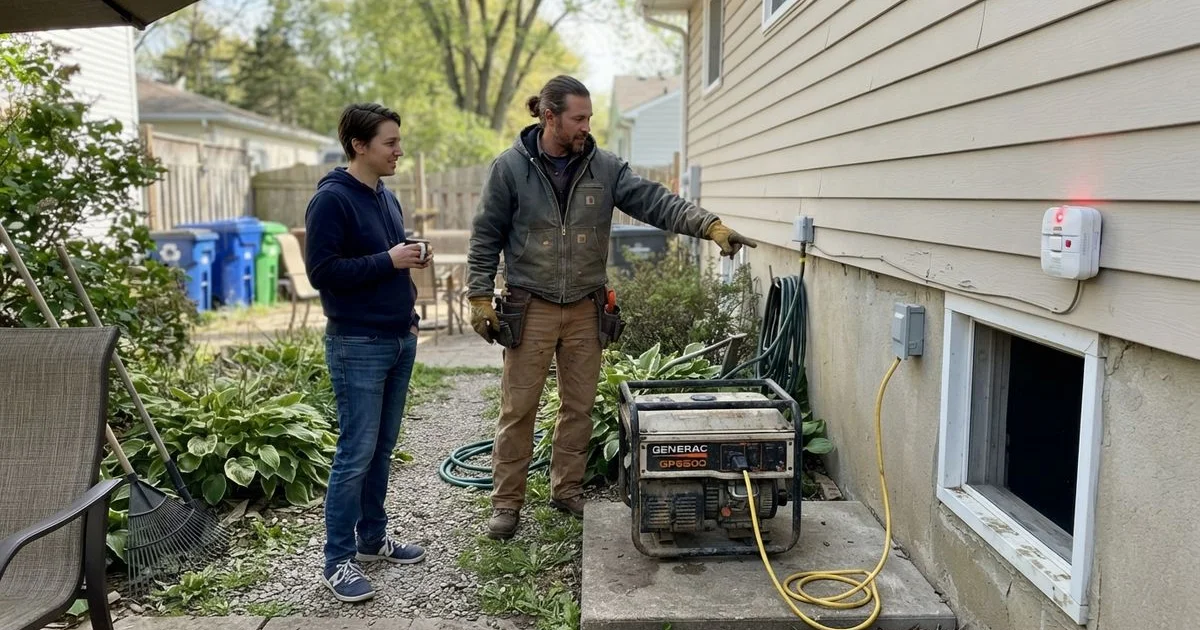
A standby generator is one of the more reassuring things you can add to a home, especially after living through an outage that knocked out heat, refrigeration, or medical equipment. It’s also a piece of equipment that produces carbon monoxide, which means placement and installation aren’t just a formality, they’re the actual safety mechanism. This is general safety information, not a substitute for a licensed electrician’s evaluation of your specific property.
Why carbon monoxide is the real risk
Standby generators run on natural gas or propane and produce exhaust that includes carbon monoxide, an odorless and colorless gas that’s dangerous at meaningful concentrations in enclosed or poorly ventilated spaces. The danger isn’t the generator itself so much as where its exhaust can go. A unit placed too close to a window, door, or vent can let exhaust drift into the home, particularly in still air or if the generator sits in a location where exhaust pools rather than disperses.
What proper placement looks like
A correctly installed standby generator sits outdoors, on its own concrete pad, at a manufacturer-specified and code-required distance from windows, doors, and vents. This distance exists specifically to keep exhaust away from any path into the home. A licensed installer accounts for your home’s specific layout, including where bedroom windows sit and prevailing wind patterns, when determining placement, rather than just putting the unit wherever’s most convenient.
| Safety element | What it does |
|---|---|
| Outdoor placement with code clearances | Keeps exhaust away from windows, doors, and vents |
| Automatic transfer switch | Prevents backfeeding power into utility lines, a hazard to utility workers |
| Concrete pad, proper grounding | Keeps the unit stable and electrically safe during operation |
| Carbon monoxide detectors inside the home | Independent safety layer in case of an unlikely exhaust issue |
| Regular maintenance and testing | Catches wear or malfunction before an actual outage |
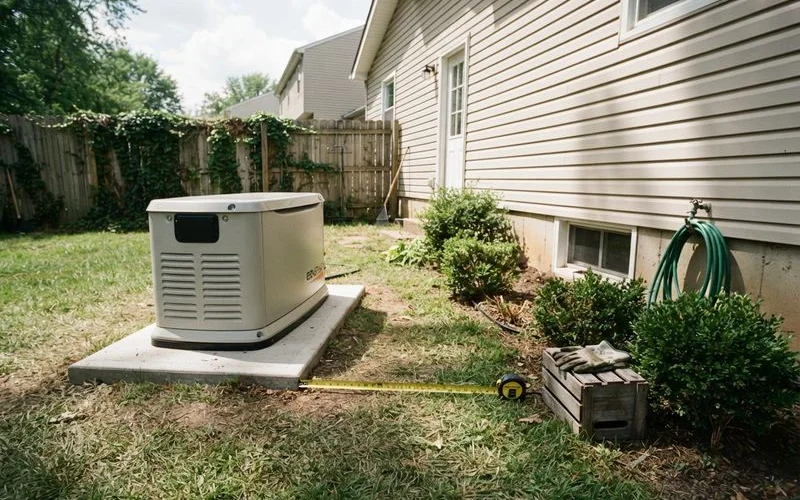
The transfer switch matters for a different reason
Beyond carbon monoxide, an automatic transfer switch is a required safety component because it prevents your generator from backfeeding power into utility lines during an outage, which is dangerous to utility workers repairing the lines and is not something an improperly wired connection would necessarily stop. This is one more reason standby generator installation isn’t a DIY project.
What to do regardless of how the generator is installed
Install carbon monoxide detectors inside your home if you don’t already have them, and test them regularly. This is a basic safety layer that costs little and matters regardless of how well your generator is installed. Have your generator serviced and tested periodically rather than only discovering a problem during an actual outage, since a unit that hasn’t run in months can fail exactly when you need it.
If you’re comparing a standby unit to a portable generator
Portable generators carry a higher real-world risk profile, not because the equipment itself is more dangerous, but because they’re more often misused under pressure. During an actual outage, it’s tempting to run a portable unit in a garage with the door cracked, or close to a window for a shorter extension cord run, exactly the placement mistakes that lead to carbon monoxide poisoning. A standby generator removes that decision entirely, since it’s permanently and correctly placed before an outage ever happens. If a portable generator is what you have or what fits your budget for now, treat placement as non-negotiable: always outdoors, always well away from windows, doors, and vents, regardless of weather or convenience.
Sizing and coverage affect safety planning too
How much of your home a generator covers changes what “safe” looks like day to day. A unit sized for essential circuits only means fewer things running, which is simpler to manage and monitor. A whole-home unit covering HVAC and everything else runs longer and more often, which makes routine maintenance and testing even more important, since it’s doing more work over the life of the system.
This is general safety information. For placement and installation specific to your property, work with a licensed electrician who can evaluate your home’s layout and local code requirements directly.
To find a licensed installer, browse the generator installation category, where local providers are ranked using the criteria on the methodology page. Start from the home page if you’re comparing generator installation against other electrical priorities.
Questions people ask
- Why is carbon monoxide the main risk with a standby generator?
- Standby generators burn natural gas or propane and produce carbon monoxide as exhaust, an odorless, colorless gas that's dangerous in enclosed or poorly ventilated spaces. Unlike a portable generator that might be run in a garage by mistake, a properly installed standby unit is placed outdoors with required clearances specifically to prevent this.
- How far does a standby generator need to be from my house?
- Clearance requirements vary by manufacturer and local code, but generally a generator needs to sit a minimum distance from windows, doors, and vents to keep exhaust away from places it could enter the home. A licensed installer sizes this correctly as part of the installation, not as an afterthought.
- Is a portable generator safer than a standby unit?
- Not necessarily, and in some ways it's riskier, since portable generators are more often misused indoors or too close to a home during an actual outage, when people are in a hurry. A properly installed standby generator removes that judgment call by being permanently and correctly placed.
- Do I need a carbon monoxide detector even with a standby generator?
- Yes. A working carbon monoxide detector inside your home is a basic safety layer regardless of what type of generator you have or how well it's installed. It's inexpensive insurance against a rare but serious failure.
Related on this site
- Browse generator installation providers
- How standby generator installation works, step by step
- Getting your home ready for storm season: generator and electrical prep
- Warning signs your home's wiring or panel needs attention now
- Where GFCI outlets are required in your home (and how to test them)
- All guides →