Warning signs your home's wiring or panel needs attention now
By Amara Okafor · Updated 2026-07-01
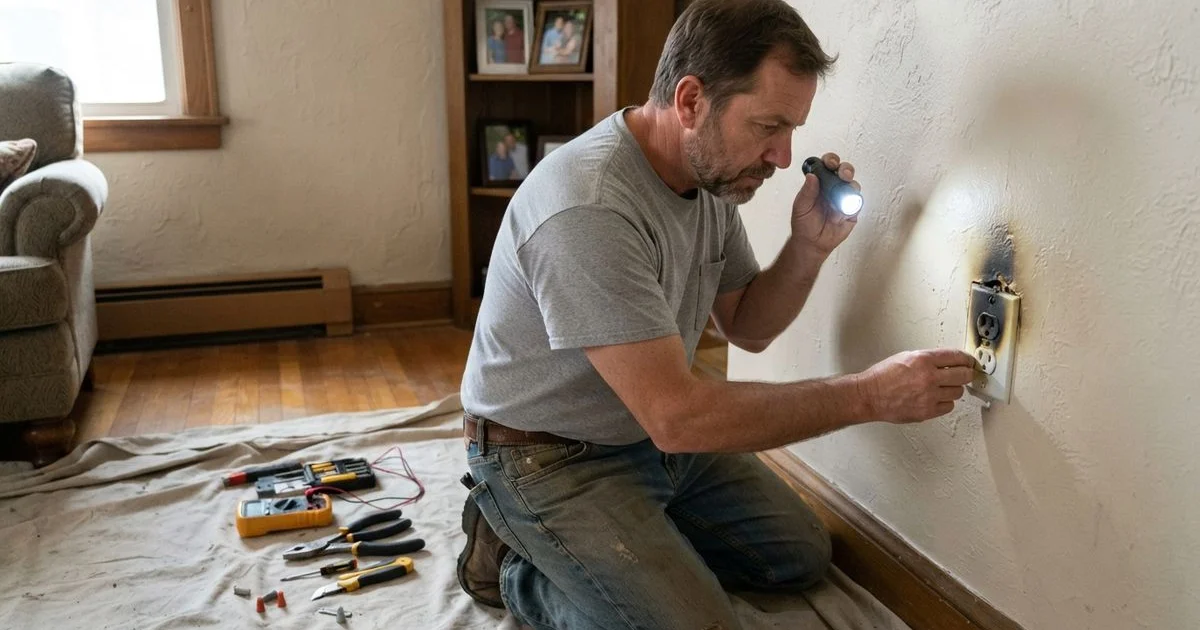
Most electrical fires and shocks don’t come out of nowhere. There’s usually a warning sign first, sometimes months ahead of a real problem, but it goes unnoticed because it looks minor: a breaker that trips a little too often, an outlet that feels warm, a faint burning smell that fades. Here’s what those signs actually mean and which ones mean stop and call someone today.
Signs in your outlets and switches
- Warm or hot outlet covers, even without visible damage, usually mean a loose connection generating heat
- Discoloration or scorch marks around an outlet or switch plate
- A burning smell near an outlet that doesn’t go away when you unplug what’s connected to it
- Buzzing or crackling sounds from a switch or outlet
- Outlets that don’t hold a plug snugly, which can indicate worn internal contacts
Any of these on their own is worth a call. More than one at once, especially paired with a burning smell, is an emergency, not a schedule-it-for-next-week situation.
Signs at your breaker panel
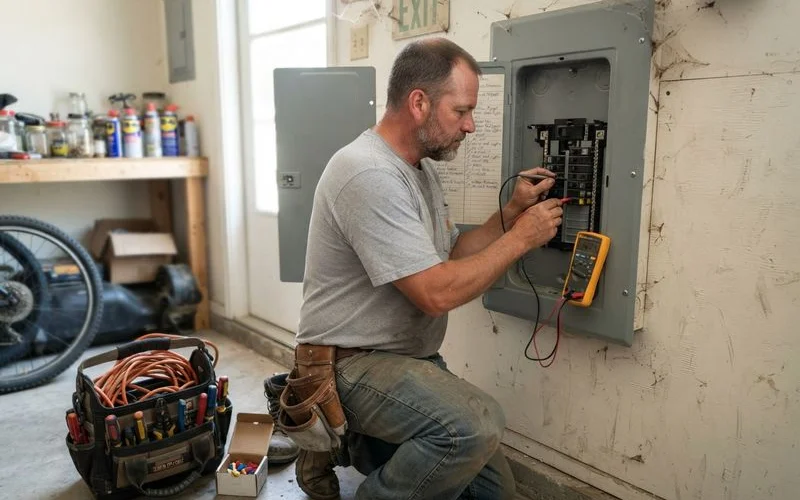
A breaker that trips occasionally when you overload a circuit is normal, protective behavior. A breaker that trips repeatedly, won’t reset, or that you’ve simply stopped using because it “doesn’t work anymore” is a different story. So is a panel that looks visibly warm, has rust or corrosion, or makes a humming or buzzing sound. If your panel carries a Federal Pacific Electric or Zinsco label, get it evaluated even without symptoms. Both brands have documented histories of breakers failing to trip during overloads, which defeats the entire purpose of the breaker.
Signs specific to older wiring types
Homes built in the 1960s and 1970s sometimes used aluminum wiring in branch circuits instead of copper. Aluminum oxidizes over time, which loosens connections at outlets and switches and creates heat buildup. Homes built earlier still may have knob-and-tube wiring, an older system with no ground wire that wasn’t designed for modern electrical loads. Neither type is automatically dangerous, but both need different handling than standard copper wiring, and neither should be assumed safe just because it’s “always been that way.”
If you’re weighing one of these older systems ahead of a purchase, the electrical checklist for buying an older home walks through what to look for room by room.
| Sign | What it usually means | Urgency |
|---|---|---|
| Warm outlet or switch plate | Loose connection generating heat | Stop using it, call today |
| Breaker trips repeatedly | Overloaded circuit or failing breaker | Call this week |
| Federal Pacific or Zinsco panel | Known breaker failure risk | Schedule an evaluation soon |
| Burning smell that lingers | Overheated wiring | Call today, treat as urgent |
| Flickering across multiple rooms | Loose connection or overloaded circuit | Call this week |
| Aluminum or knob-and-tube wiring present | Older system needing specialized handling | Schedule an evaluation |
What to do once you notice a sign
For anything urgent, sparks, a lingering burning smell, or a breaker that won’t reset at all, shut off power to that circuit or the main panel and call an electrician right away. For everything else, don’t ignore it just because it hasn’t caused a visible problem yet. An evaluation visit is far cheaper than the cleanup after an electrical fire, and reviewers across Spartanburg’s electricians consistently mention technicians who take the time to explain what they found and why it matters, rather than just fixing the immediate symptom.
Why these signs get ignored so often
Most of these symptoms are intermittent or easy to explain away in the moment. A breaker that trips once seems like a fluke. A slightly warm outlet feels minor compared to an obvious emergency. The pattern that actually matters is repetition and combination: one warm outlet noticed once isn’t the same signal as a warm outlet that stays warm every time you use it, paired with a breaker that’s started tripping more than it used to. Keep a mental note, or an actual note, of anything that recurs, since that pattern is what tells an electrician where to start looking.
This is general safety information, not a substitute for an in-person inspection. If you’re unsure whether a symptom you’re seeing is urgent, treat it as urgent and call.
To find a provider for a full evaluation, browse the residential electrical category, where local companies are ranked using the criteria explained on the methodology page. You can also start from the home page to compare across Spartanburg’s electrical categories.
Questions people ask
- Is a flickering light always a wiring problem?
- Not always. It can be a loose bulb or a failing fixture. But flickering that happens across multiple rooms, or that gets worse when an appliance runs, points to a loose connection or overloaded circuit that needs an electrician's look.
- What panel brands are considered a safety concern?
- Federal Pacific Electric (FPE) and Zinsco panels, common in homes built mid-century, are the two most frequently flagged for breaker failures where the breaker doesn't trip during an overload like it's supposed to. If your panel has either brand name on it, have an electrician evaluate it regardless of whether you've had any visible problems.
- How do I know if my home has aluminum wiring?
- Aluminum branch wiring was common in homes built during the 1960s and 1970s. It's silvery-gray rather than copper's reddish-orange, and may be marked AL on the sheath if you can see it in an attic or unfinished basement. If your home falls in that build era and you're not sure, an electrician can check during any other visit.
- Should I be worried about warm outlet covers?
- Yes. A warm or hot outlet or switch plate, even without visible damage, usually means a loose connection generating heat, which is a fire risk. Stop using that outlet and call an electrician.
Related on this site
- Browse residential electrical providers
- What to check electrically before buying an older Spartanburg home
- New homeowner electrical checklist: what to check in year one
- Where GFCI outlets are required in your home (and how to test them)
- Electrical safety upgrades to help an aging parent stay home
- All guides →