
Electrical safety upgrades to help an aging parent stay home
By Amara Okafor · Updated 2026-07-15
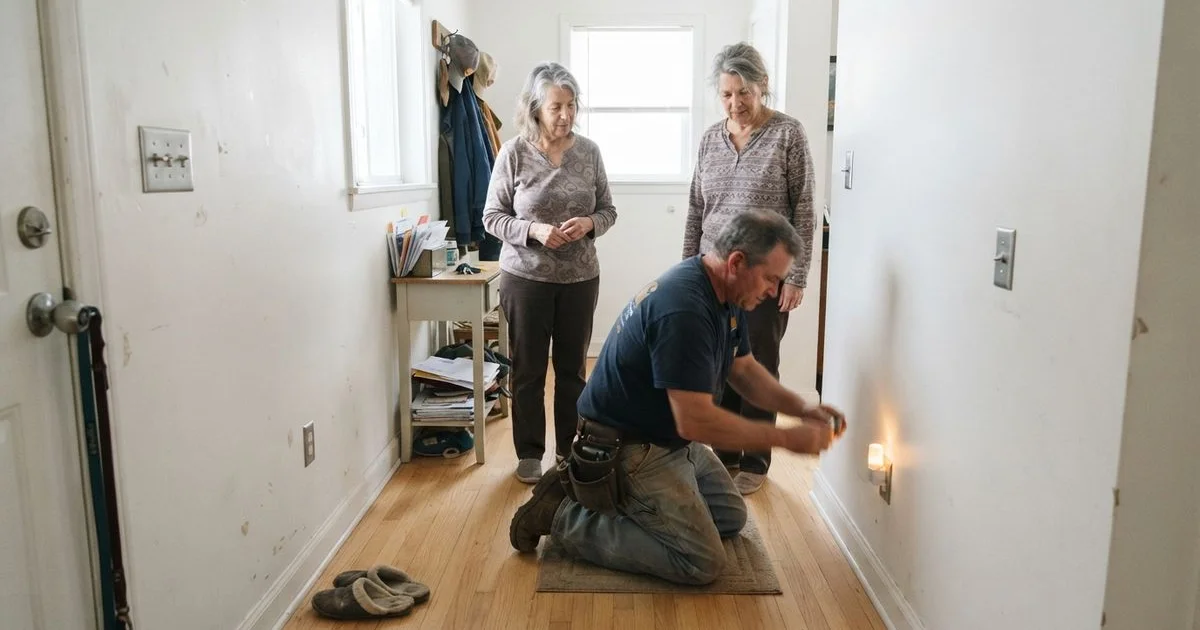
Helping a parent stay safely in their own home longer usually starts with the obvious things, grab bars, a walk-in shower, maybe a stairlift. Electrical safety gets overlooked, but a few targeted upgrades can meaningfully reduce fall risk and give both you and your parent more peace of mind day to day.
Lighting: the highest-impact upgrade
Poor lighting is one of the most common contributors to falls, especially on stairs, in hallways, and in bathrooms at night. Adding motion-sensor lighting in hallways and bathrooms means your parent never has to fumble for a switch in the dark. Brighter, well-placed fixtures on stairways, along with clearly marked light switches at both the top and bottom, address a genuinely common and preventable hazard.
Outlets and switches: reachability and safety together
Standard outlet height can be a real obstacle for someone with limited mobility, especially anyone using a wheelchair or walker. Raising outlets and lowering switches to a more reachable height is a straightforward project that makes daily use easier without changing how the space looks or functions for anyone else. At the same time, confirm GFCI protection is present and working in kitchens and bathrooms, since these are also the rooms where a fall near water is most consequential.
Panel capacity for medical equipment
If your parent uses powered medical equipment, an oxygen concentrator, a hospital bed, a stairlift, or mobility scooter chargers, it’s worth having an electrician check whether the existing panel has adequate capacity. Older homes with smaller panels can be running close to their limit even before adding equipment like this, and an overloaded circuit is the last thing you want failing on essential equipment.
It’s also worth asking about dedicated circuits for critical equipment specifically, rather than plugging a medical device into whatever outlet is nearest. A dedicated circuit means that equipment isn’t sharing power with a hair dryer, space heater, or other high-draw device that could trip a breaker at an inconvenient moment.
Other small changes that add up
A few less obvious upgrades round out an aging-in-place electrical plan. Consider illuminated switch plates that glow faintly in the dark, so switches are easy to locate without needing a light already on. If your parent uses a wheelchair or scooter indoors, check that outlets in main living areas aren’t blocked by furniture arranged for the new mobility pattern. And if smoke or carbon monoxide detectors are original to the home, confirm they’re current models with functioning batteries or hardwired backup, since detector reliability matters even more for someone who may take longer to respond to an alarm.
| Upgrade | What it addresses |
|---|---|
| Motion-sensor lighting in hallways and bathrooms | Reduces fall risk from fumbling for switches at night |
| Brighter stairway lighting with switches at both ends | Addresses one of the most common fall locations |
| Lowered outlets, raised switches | Improves reachability for limited mobility |
| GFCI verification in kitchen and bath | Safety near water, higher-risk fall areas |
| Panel load check for medical equipment | Prevents overload with added powered devices |
| Backup power for essential equipment | Protects against outages affecting medical devices |
Backup power for essential equipment
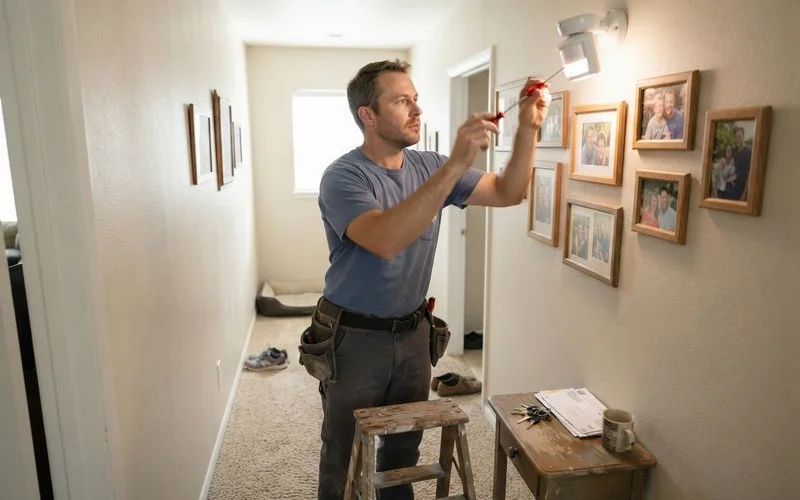
For a parent who relies on powered medical equipment, a short power outage isn’t just an inconvenience, it can be a real safety issue. A generator sized specifically around essential medical and safety equipment, rather than the whole home, is often a more affordable and targeted option than a full-home standby system, though a whole-home unit is worth considering if budget allows.
Starting the conversation
These upgrades work best framed as making the home more comfortable and convenient, not as a sign that something’s wrong. Motion-sensor lighting and better-placed outlets genuinely improve day-to-day life for anyone, which makes them an easier upgrade to introduce than a bigger, more visible change. Walk through the home together and note where your parent already struggles, whether that’s a dark stairwell or a hard-to-reach outlet, and start there.
To find a local electrician experienced with accessibility and safety upgrades, browse the residential electrical category, where providers are ranked using the criteria explained on the methodology page. Start from the home page to compare across all electrical categories in Spartanburg.
Questions people ask
- What's the most important electrical upgrade for aging in place?
- Better lighting, especially in hallways, stairs, and bathrooms, tends to make the biggest practical difference for fall prevention, followed closely by making sure GFCI outlets are present and working in bathrooms and kitchens.
- Does a home need a panel upgrade to support medical equipment?
- It depends on the equipment and the panel's existing capacity. Equipment like oxygen concentrators or powered mobility chargers add load that an older, smaller panel may not have room for, especially alongside other household use. An electrician can run a load calculation to check.
- Should outlets be moved to a different height for an aging parent?
- Raising switches and lowering outlets to a more reachable height is a common accessibility adjustment, particularly for someone using a wheelchair or with limited mobility. It's a relatively small project that makes daily use noticeably easier.
- Is a whole-home generator worth it for a parent who depends on medical equipment?
- For anyone relying on powered medical equipment, a backup power source is worth serious consideration, since even a short outage can be a real safety issue. Talk through sizing and coverage needs with an electrician based on the specific equipment involved.
Related on this site
- Browse residential electrical providers
- Warning signs your home's wiring or panel needs attention now
- What to check electrically before buying an older Spartanburg home
- New homeowner electrical checklist: what to check in year one
- Where GFCI outlets are required in your home (and how to test them)
- All guides →